The surprising part of multi-chain wallet security is that the wallet itself is rarely the only—or even the most important—security boundary. A browser extension can display balances, simulate transactions, and organize dozens of networks, but it does not automatically make a risky approval safe. In many cases, the decisive question is simpler: did the user understand what the transaction would authorize before signing it?
That distinction matters for US-based DeFi users because the convenience of moving among Ethereum-compatible networks also increases the number of places where a mistake can occur. A wallet may use one account across Ethereum, layer-2 networks, and other EVM chains, while each network has different applications, tokens, fees, bridges, and contract risks. Comparing a multi-chain browser wallet with a single-chain setup or a hardware wallet therefore requires more than asking which product has the longest feature list. The useful comparison is between different security models.
What a multi-chain wallet actually changes
An EVM, or Ethereum Virtual Machine, wallet manages accounts that can interact with Ethereum-compatible blockchains. The same private key may correspond to the same address on several EVM networks, but the surrounding environment is not identical. A token with the same symbol can exist on different chains; a decentralized application can have different contract deployments; and a transaction that looks familiar may still point to an unexpected contract.
This creates a useful but easily missed mental model: a multi-chain wallet is not one security problem. It is a collection of related security problems presented through one interface. The private key remains central, but security also depends on network selection, contract identification, token approvals, signature requests, phishing resistance, and the user’s ability to distinguish a legitimate application from an imitation.
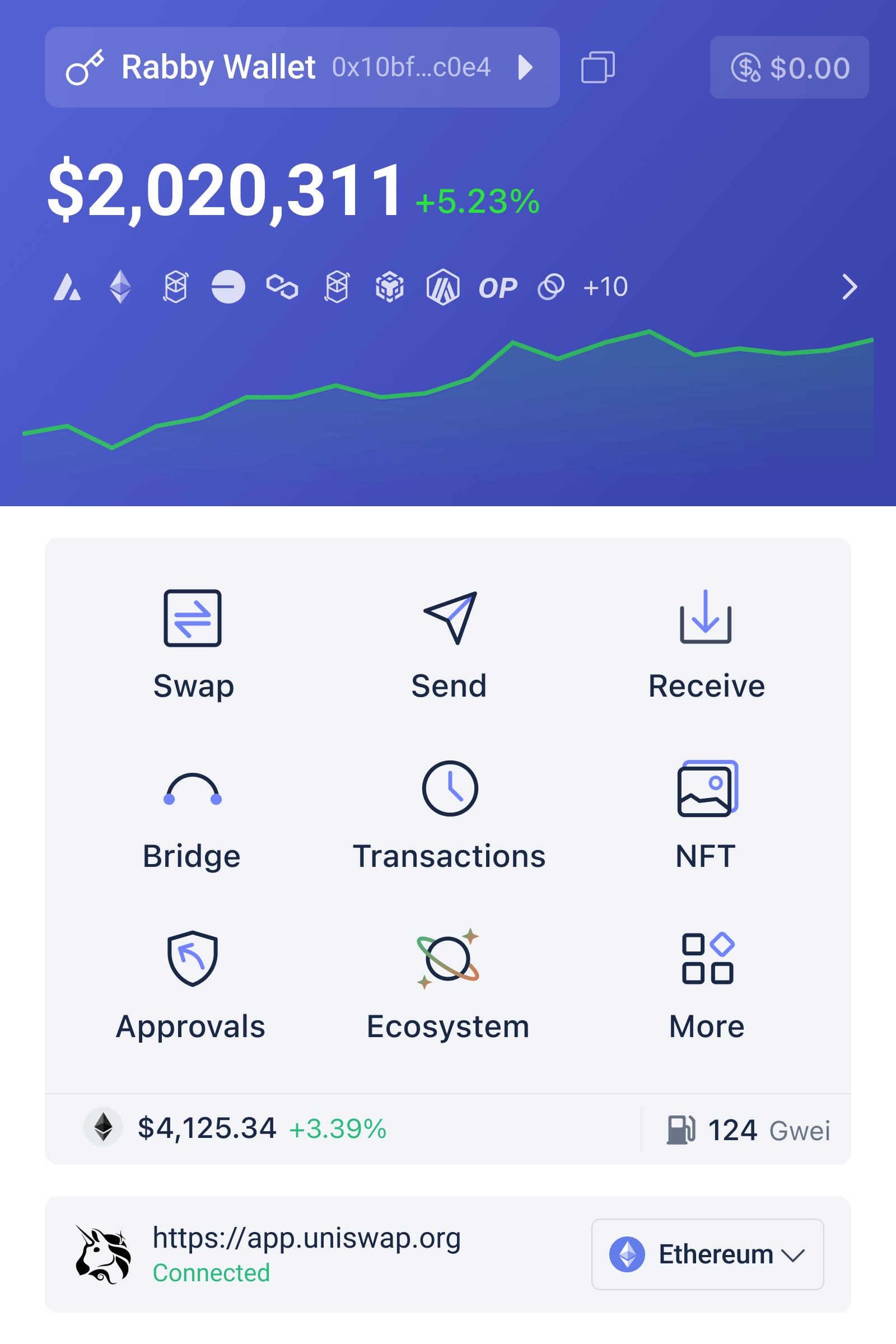
That is where a wallet such as Rabby is positioned differently from a minimal account manager. Its value proposition is not simply that it can connect to many EVM chains. The more meaningful question is whether the interface helps the user inspect a proposed action before it is signed. Transaction previews and warnings can improve decision quality because they expose effects that a raw hexadecimal transaction does not communicate well. They are aids to judgment, not substitutes for it.
Three approaches, three different trade-offs
Single-chain wallet: narrower surface, narrower reach
A single-chain wallet can be easier to understand. If a user only interacts with Ethereum, there are fewer network-selection errors and fewer opportunities to confuse similarly named assets or contracts. This simplicity may be valuable for a beginner or for an account dedicated to one strategy.
The limitation is obvious: DeFi activity increasingly spans multiple environments. A user who adds separate wallets or extensions for each chain may reduce conceptual complexity in one area while increasing operational complexity elsewhere. More extensions, more recovery procedures, and more opportunities to download a fraudulent application can create their own risks. Simplicity is not automatically safer when it produces fragmented habits.
Multi-chain browser wallet: better context, persistent user responsibility
A multi-chain browser wallet offers a unified way to connect to decentralized applications, switch networks, review assets, and sign transactions. Recent Rabby project messaging continues to emphasize broad Ethereum and EVM coverage, including use through Chrome and Brave. For a DeFi user, that breadth is practical: the same workflow can cover lending, trading, staking, and other applications across compatible networks.
Its trade-off is concentration of attention. When one extension becomes the gateway to many chains, a compromised browser profile, malicious extension, exposed seed phrase, or careless signature can affect a wide range of activity. A warning screen can explain a transaction, but it cannot protect a user who approves without reading it. Nor can any interface reliably predict every consequence of a complex contract interaction, especially when protocols compose with one another or behave differently under unusual market conditions.
Hardware wallet: stronger key isolation, more friction
A hardware wallet stores or uses private keys in a separate physical device, making remote theft more difficult when the device is configured correctly. This is especially relevant for long-term holdings or accounts that should not sign frequently. The security gain comes from isolating key operations from the everyday browser environment.
However, hardware storage does not eliminate smart-contract risk. A user can still approve a malicious allowance, sign a deceptive message, or confirm the wrong chain or contract on the device. Hardware wallets also add recovery, compatibility, and transaction-confirmation friction. For active DeFi users, that friction may encourage poor workarounds, such as moving funds into a hot wallet with more exposure than intended. The best arrangement may be layered: a hardware-protected account for savings and a deliberately limited browser wallet for routine experimentation.
Installation is part of the security model
Downloading an extension should be treated as a high-risk action, not a casual prelude to using DeFi. Search results, advertisements, cloned websites, and misleading download pages can imitate legitimate branding. A safer process begins with verifying the source, checking that the browser extension is the expected one, and avoiding unsolicited links or “support” messages. Readers seeking installation guidance can review the rabby extension download information, then independently confirm the extension details in the browser’s official store before entering any seed phrase.
The seed phrase boundary is absolute. A legitimate wallet installation should not require a user to type a recovery phrase into a website, send it to support, or paste it into a chat. Anyone who obtains that phrase can generally recreate the wallet elsewhere. A password protects access to an installation; the recovery phrase controls recovery of the wallet itself. Confusing those two roles is one of the most consequential misconceptions in wallet security.
After installation, a sensible setup separates identities by purpose. One account can hold long-term assets, another can interact with unfamiliar applications, and a third can be used for testing with limited funds. This does not make a malicious contract harmless, and it does not protect assets held in the same compromised account, but it limits the blast radius of a mistake. The method resembles compartmentalization in computer security: containment is useful because prevention is imperfect.
How to evaluate a transaction rather than merely approve it
Before signing, inspect the network, recipient or contract, asset being transferred, requested allowance, and whether the action is a direct transfer or a contract interaction. Token approvals deserve particular attention because an approval may authorize a contract to spend tokens later, not just during the current transaction. An approval for an unlimited amount can be convenient, but it may create a larger future exposure than a specific allowance.
Signature requests also require care. Not every dangerous action looks like a familiar token transfer. A user may sign a message that grants permissions, authorizes an order, or interacts with a protocol’s off-chain workflow. The exact meaning can depend on the application and the wallet’s interpretation. If the purpose of a signature is unclear, declining is rational—not evidence of being overly cautious.
Transaction simulation and warnings are useful because they translate machine-readable instructions into a more human-oriented preview. Yet simulation has boundaries. It reflects assumptions about the current state of the blockchain and the behavior of contracts; outcomes can change with timing, price movement, external calls, or protocol updates. A reassuring preview is evidence to consider, not a guarantee. That is the central trade-off of convenience-focused wallet design: better information can reduce avoidable mistakes, but it cannot turn open, adversarial financial systems into closed and predictable ones.
A practical framework for choosing the right setup
Ask three questions. First, how often will the account sign transactions? Frequent interaction favors a usable browser wallet, but it also argues for smaller balances and clear spending limits. Second, how costly would loss be? Long-term savings deserve stronger isolation and backup discipline than experimental liquidity. Third, how complex are the applications and chains involved? More complexity increases the value of transaction explanations while also increasing the chance that a user misunderstands them.
For many DeFi users, the strongest answer is not “browser wallet versus hardware wallet.” It is a combination of roles: a browser extension for active, limited-value interactions; a hardware-protected account for funds that should rarely move; and separate accounts for unfamiliar protocols. The arrangement introduces some administrative overhead, but it aligns security controls with the different ways funds are used.
What to watch as multi-chain wallets evolve
The next meaningful improvement in wallet security is likely to come from better interpretation rather than simply more chain support. As applications combine bridges, swaps, lending markets, and automated permissions, users need interfaces that explain the economic effect of a transaction—not merely its technical fields. Conditional scenario: if wallets can make complex permissions understandable without hiding uncertainty, they may reduce preventable signing errors. If they present warnings as universal guarantees, users may develop false confidence instead.
The practical lesson is deliberately modest. A multi-chain wallet can reduce friction and improve transaction context, while a hardware wallet can strengthen key isolation. Neither removes the need to verify sources, separate account purposes, control approvals, and question unclear signatures. Security is best understood as a system of habits and boundaries. The wallet is one component—and the quality of the decision made immediately before signing remains the final boundary.
Frequently asked questions
Is a multi-chain wallet less secure than a single-chain wallet?
Not necessarily. A multi-chain wallet may reduce fragmented workflows and provide more transaction context, but it also exposes the user to more networks, applications, and contract types. Its security depends on source verification, account separation, careful signing, and sensible limits. A narrower wallet can be simpler, but simplicity alone does not prevent phishing or malicious approvals.
Should I use a hardware wallet with a browser extension?
That can be a useful layered setup. The hardware device can protect the private key while the browser extension provides access to DeFi applications and transaction information. It does not make a malicious contract safe, however. Review the transaction on both interfaces, keep active funds limited, and use a separate account for long-term holdings where practical.
What is the safest first step after installing a wallet extension?
Verify that the extension came from an authentic source, secure the recovery phrase offline, and test with a small amount before using significant funds. Then confirm the selected network and read approval or signature requests carefully. Never share the recovery phrase with a website, support representative, or anyone claiming to help.
Deixe um comentário